The world’s currencies (digital and physical) are only worth something because we all agreed that they are. Without this universal agreement, they are worth no more than the metals or paper they’re made from. So why not also give them practical value?
Practical currency is not a new thing. Anything from a bullet to a pill can form the basis of a currency. Its portability, convenience, and fixed value is really the only thing that sets it apart from traditional trade and barter. Historically, cowrie shells, grain, and copper and bronze (which could be melted into knives), were used. In fiction, most famous are the bottle caps from Fallout. But few people have explored practical currency more than Brandon Sanderson. In Mistborn, coins and other metals can be consumed as magical fuel, and in the Stormlight Archive, currency takes the shape of tiny gems embedded in glass that absorb magical storm light. I’ve seen similar examples in cultivation fantasy novels, with currency coming in the form of beast cores or crystalized mana that can give power to the individual who holds or consumes it. See other examples here.
Which is all great… in a world where magic is real. Very few examples of practical currency would actually work as a real currency in the modern age. The ideal practical currency should be something that is durable, portable, and non-consumable or perishable, non-toxic, and compatible with established coinage infrastructure (i.e., more or less coin shaped).
So, is it possible to have real government issued currency with practical value? I’m talking about coins that can generate power and be used as batteries, coins that can absorb and cleanse pollutants, detect toxins or contagions, or coins that gather and transmit useful weather or traffic data. Due to the wide-spread nature of coins in circulation, any practical value they might impart would be a boon to civilization. Below I will explore some possible technologies that could function as useful currency, and I will rank them from most practical to least practical.
With all the talk of new coins being minted or discontinued lately, maybe someone from the Department of the Treasury (of any nation) will read this and decide to make the first modern practical coin.
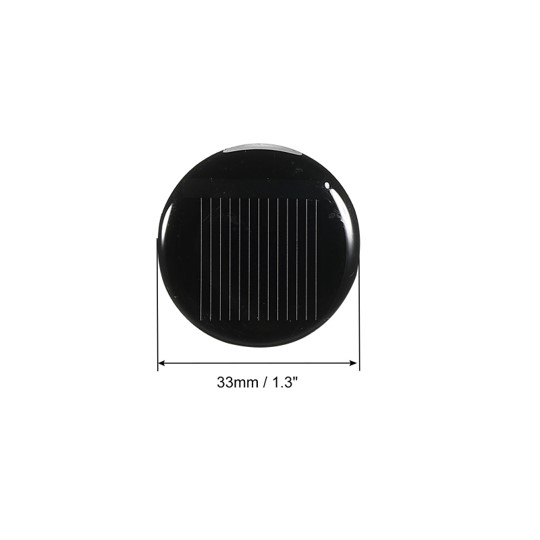
Photovoltaic coins.
These are by far the most practical and likely to be used in modern day settings. With small and round photovoltaic cells already purchasable, it would be a fairly small matter to identify a more durable and compatible transparent material to withstand circulation, and mass produce them in the shape of a coin with all associated value markings. Not only would the low cost of materials allow the coin to be valued at less than a dollar, but it would also be capable of generating far more value in the form of energy over the course of its circulation. People who hold this currency could add it to an array on their vehicles or homes, constantly generating solar power. Of course, leaving out your money would make it vulnerable to theft, but with its value per surface area not much different than a larger solar panel, that would be far too much risk for the reward. The environment would see the greatest benefits over time. Because traditional solar panels lose value over their lifespan, a fixed value photovoltaic coin would encourage more investment in solar energy. This type of currency would also tend to accumulate in the possession of those most likely to put it to use for energy production. It could even take the form of photovoltaic bills, assuming their durability could be improved. I could see a utopian society using something like this as currency.
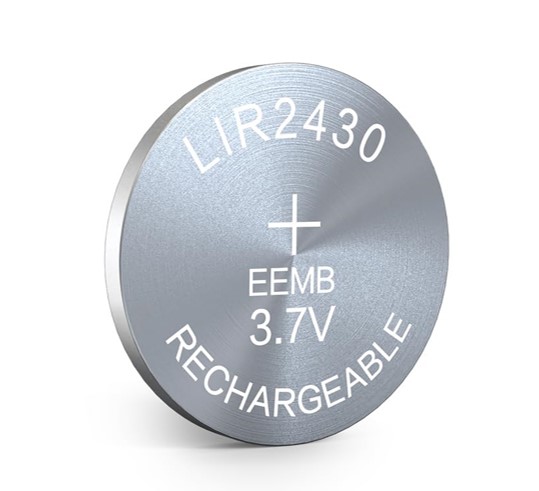
Battery coins.
Coin batteries might be the most obvious coin-shaped practical currency. However, most coin batteries are not rechargeable, and those that are can be expensive, toxic, and not very durable. Perhaps the best candidate would be, in my opinion, a nickel metal hydride. However, if the rechargeability problem with zinc air batteries can be solved, that would be the least toxic, safest, and cheapest option. Lithium batteries are less preferred, primarily due to safety concerns and cost. These coins would also have a very limited lifespan in circulation. As soon as its max cycle life is reached, battery coins would lose its ability to hold a charge. It’s unlikely they would last the usual 25-30 years of an average coins circulation. But the advantages shouldn’t be undersold. If coin batteries were everywhere and more devices were designed to use them, nobody would be without portable power ever again.
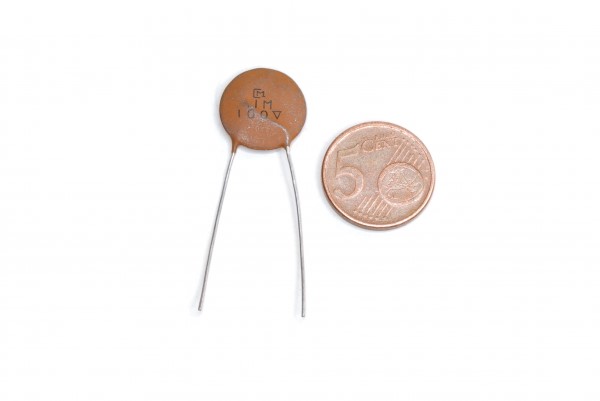
Capacitor coins.
Capacitors are another option for energy storage, albeit temporary. They come in a variety of types, e.g., electrolytic, film, ceramic disk, etc, but only film and ceramic disc capacitors tend to be thin and non-toxic enough to serve as coinage. And while film capacitors can hold a charge for much longer (weeks to months), they are also more expensive. Capacitor coins might be best used in conjunction with power generating technology, like photovoltaic cells, to offset this charge leakage problem. But with their ability to deliver energy rapidly and at a high voltage, I could see a future with most portable technology having little coin slots to help add a bit of charge to the device. However, dangers may also arise from accidental discharges of capacitors, especially several stacked in series, causing fires or electric shocks.
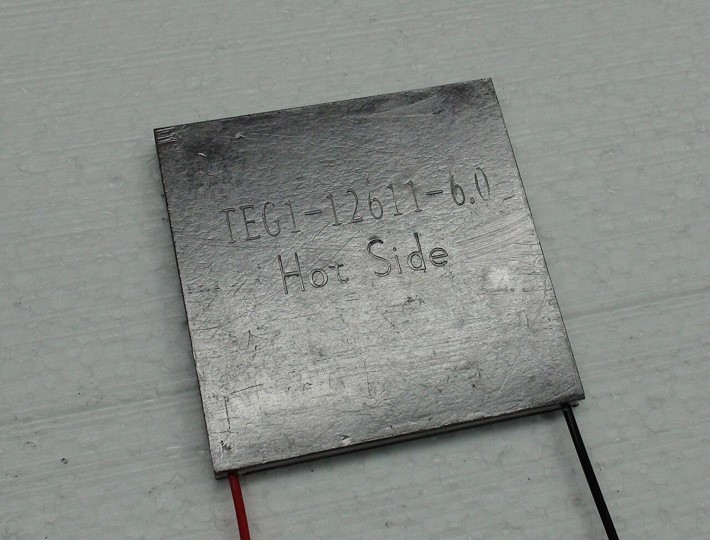
Thermoelectric generators (TEGs) coins.
TEGs are devices that generate electricity based on the flow of heat through thermocouples, P and N type, known as the Seebeck effect. There are many types of TEGs with different thermal ranges and properties based on the P and N type materials used. Some of these materials, like those in Type T Thermocouples, are already commonplace in coinage, copper and its nickel alloy, constantan. A thermoelectric generator made from these or similar materials, and in the shape of a coin, could readily convert temperature gradients into power. You could generate electricity with body temperature, or by arraying the coins on a cold window or hot stove. A TEG coin could also be run in reverse, i.e., the pielter effect, generating a hot and cold side of the coin when electricity is applied. Compatible appliances could be made to cool or heat houses and electronics.
Light coins.
Just like Brandon Sanderson’s Stormlight Archive, light has a practical value of its own. With LEDs being durable and coupled with one of the power sources mentioned above, a coin that emits light would mean nobody would ever find themselves without a small flashlight.
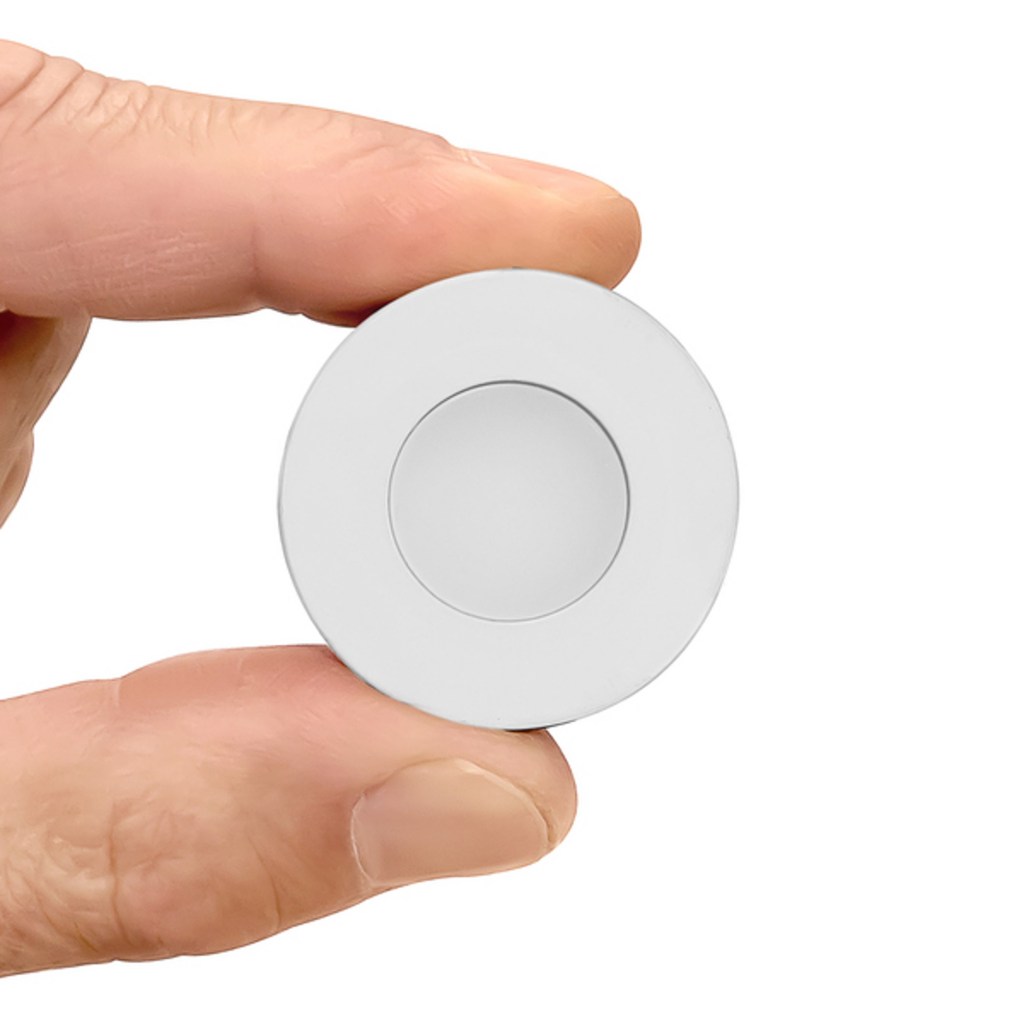
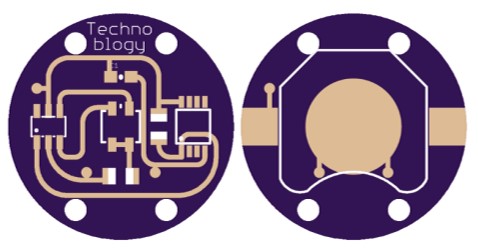
Microchips and sensor coins.
Microchips and sensors are small enough to readily fit inside a coin, and durable enough to endure general circulation. Their ubiquity would allow the average person ready access to whatever features or functions they provide. Being able to store audio or video messages on coins could be of huge value to advertisers. Public trust in the currency is the biggest hurdle, as most people might consider it a breach of privacy. Even microchips used purely for increasing processing power or data storage, could potentially be corrupted by viruses and malware. Most sensors, such as temperature and accelerometers, aren’t worth much to weather forecasters or traffic monitors unless the coins also have a means of transmitting data, which could also be misused. However, if the coinage was capable of simply detecting toxic chemicals, radiation, viral particles, etc, and alerting the coin holder in some way without transmitting the information, it could have its niche uses.
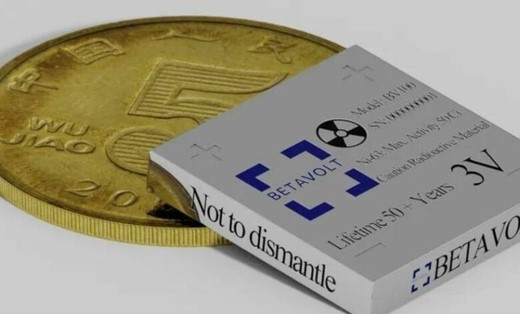
Alpha and beta voltaic coins.
These are often called nuclear batteries, although they do not store energy so much as produce it. The radioactive material inside emits alpha or beta radiation, which interacts with a semiconductor, generating a small amount of electricity over time, usually on the order of micro Watts. They are used to power medical devices like pace makers for decades at a time without needing to be recharged or replaced. While considered safe in this context, distributed widely and handled roughly, could result in radiological events and exposure. Perhaps the safest radio-voltaic cells would be tritium powered, as tritium decays into inert helium with a 12 year halflife. Nickel-63 batteries of coin-comparable size are already being produced, and with a 100 year halflife and decay into stable copper, it would be the best option by far. Aside from public safety risks related to radiation exposure, the biggest hurdle is the cost. Not only is it hard to make Nickel-63 and tritium, the denomination value of the coin would need to be over $500 in order to offset the costs of production. But for a fictional Atompunk world, this currency would be ideal.
Clean coins.
A coin made from zeolite, activated carbon, biopolymers, or palladium or other catalysts could theoretically be made strong enough to withstand circulation and absorb or detoxify meaningful toxins, heavy metals, or other pollutants from water, the air, or the general environment. However, this might also require that the coinage be heated or treated in some way to be purged of said toxins.
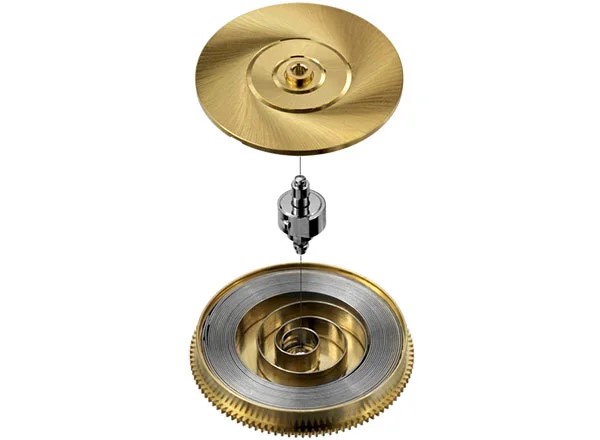
Mainspring coins.
A coin with a mainspring is fit for steampunk or gearpunk scifi or fantasy novel. A mainspring is a coil of thin metal ribbon that can store mechanical energy in the form of tension, much like a tradition spring. These are the things that power mechanical watches. Anyone with a passing interest in clockwork and watches, may have already noted how similar in size and appearance the mainstpring barrel of a mechanical watch is to a coin. This coin might very well be the cheapest and easiest to make of all of them, but unfortunately, the mechanical power stored in a wound spring is miniscule compared to the other options discussed. So, aside from being a fun fidget spinner, or stacking many of them to make a small mechanical battery array, they don’t have much value outside a fictional clockwork world.
Piezo coins.
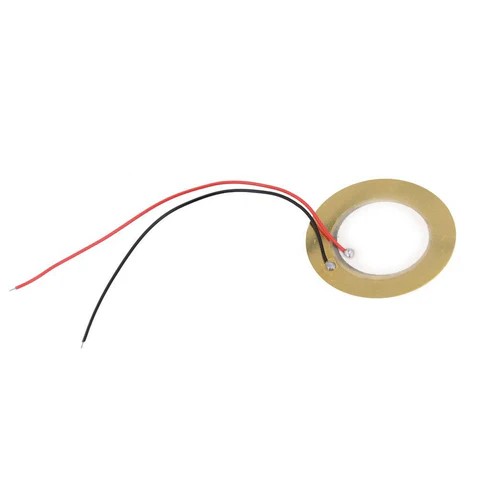
Piezoelectric technology allows for the generation of electricity due to mechanical motion or impacts. Integrated into a coin along with energy storage, the constant tumble and jingle of coins could produce a miniscule amount of power. Or conversely, a piezo material paired with a power source can vibrate at high frequencies and be used to mist water for humidity or generate sound, among other niche uses.
Currency sets
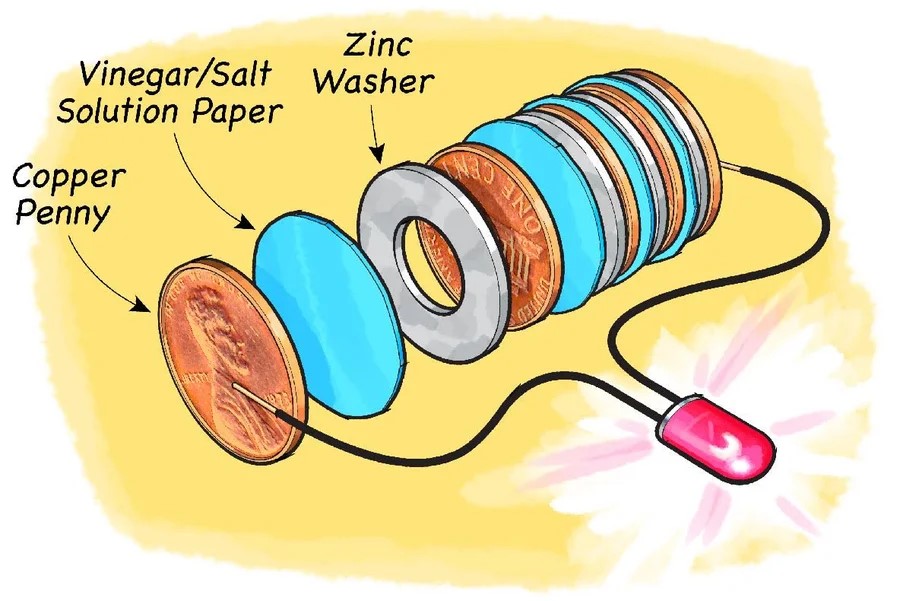
While none of the coins listed above have a huge practical value individually, their value could be improved by other coins with supportive functions. A set of multiple denominations of coin could be stacked or arrayed with one another, providing additional functions. I’m imagining something like the early voltaic piles, just alternating zinc and copper plates (in the shape of coins) that will generate electricity when salty, wet paper is stacked between them. But of course, we wouldn’t want this currency set to degrade when used. A photovoltaic coin place on top of a battery coin, which was then placed on top of a light coin, would provide light throughout during the night. A photovoltaic and TEG coin could cool a house down during the warmest hours of the day.
Your ideas?
These are some of the best coin-shaped practical currencies I could think of. Please leave your own ideas in the comments below. What would be another great practical currency if not restricted to the shape of a coin? What form did your currency take in your favorite fictional world.
Until next time, write well and science hard.

Loved the piece… very PNW practical. But here’s my read: currency isn’t value; it’s a ledger of who owes whom. We used to pretend the token was the value (gold/silver), then the U.S. bailed on that party in the late ’60s/early ’70s and dragged the rest of us into fiat; where the promise, not the metal, does the heavy lifting.
“Practical currency” sounds great until you notice the trend line: fewer people want things you must hold, lose, or launder in your jeans. Practicality today is transferability + auditability, not weight in your pocket. Possession is a bug, not a feature.
And the Mistborn angle is perfect irony: coins you can literally burn for power are consumables… use equals loss. Physical cash is similar: every swipe to digital makes bills a little less useful, because their “practical purpose” depends on custody, friction, and wear. Both systems leak with use; that leakage is one reason tokens are fading.
From my side of the Cascades, sipping a too‑earnest pour‑over, I’d say money’s modern job is clean debt‑tracking, not shiny-object storage. If we want “practical,” we should optimize the ledger, not the metal.
LikeLike
I agree with all of that. Except that possession, while not ideal, is a reality. And probably not one that most governments will give up anytime soon. And until they stop minting coins, they might as well make those coins have a purpose that will incentivize people to take possession of them and harness them for practical value. A solar coin could cost as little as 25 cents to make yet produce four times that in electricity over the course of its time in circulation. And without the coin losing value, solar investment won’t be nearly so risky. You’re right in that most currency, with the exception of commodities, does not have actual value and just represent where that value should be, but that doesn’t mean that coins can’t have value and that their possession can’t be of value to the possessor.
And yes, I specifically suggested these options because they were not consumable and mentioned it would set them apart from consumable currencies as used in fiction, which were definitely not practical. I don’t count anything as consumable if it’s lifespan exceeds or approaches the average of a circulating coin, which is about 20 years.
In short, why keep printing useless metal when we could print metal with a use? There only appear to be pros instead of cons, ignoring the cons of Fiat currency as a whole, which you summarized well.
Thank you for reading and leaving a comment. This post was definitely a departure from my usual for me so I hope you check out some of my other stuff too.
LikeLike